Poor sleep is not only a mood or habit problem. Restless legs, sudden daytime sleep attacks, loud snoring with breathing pauses, and acting out dreams can point to a neurological sleep disorder. On World Mental Health Day, 10 October 2026, patients in Hyderabad should know when a neurologist is the right next step.
Most adults need about 7 to 9 hours of sleep. A few late nights during Navratri will not damage the brain. Sleep that is unrefreshing for weeks, or sleep with abnormal movements and breathing pauses, deserves a proper look. Sleep-related neurological care at ZOI Hospital, Attapur starts with that distinction.
How does sleep affect brain health?
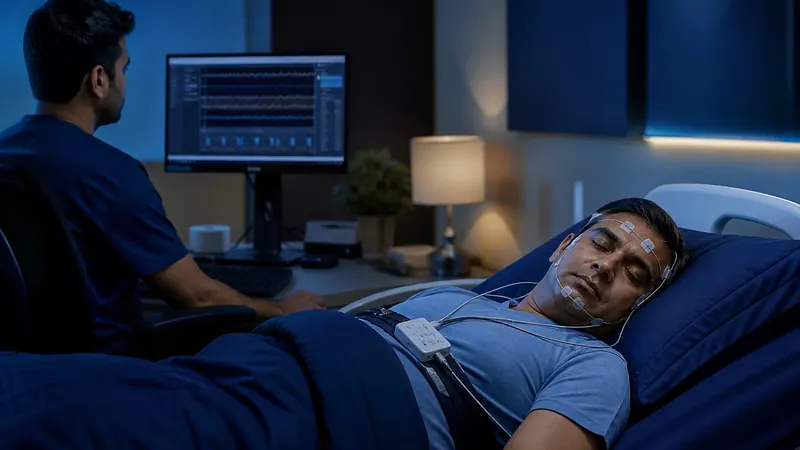
During stable sleep the brain clears metabolic waste, consolidates memory, and resets pain pathways. Short sleep raises blood pressure and makes migraine and low mood harder to control. Treating only the daytime worry, while ignoring legs that will not stay still at night, often fails.
Which sleep symptoms need a neurologist in Hyderabad?
- Restless legs in the evening that ease when you walk and return when you lie down.
- Acting out dreams, shouting, or falling out of bed. This can be an early clue to a neurological condition and should not be dismissed as stress.
- Sleep attacks in conversation or while driving, or brief weakness with laughter.
- Loud snoring with witnessed pauses, morning headache, and daytime sleepiness. This pattern suggests sleep apnea, which raises stroke risk.
- Night episodes that may be seizures rather than nightmares, especially if the person is confused afterwards.
Low mood and anxiety still need their own care. A neurology visit does not replace that. It checks whether a brain, nerve, or sleep-breathing problem is feeding the exhaustion.
What happens at a sleep neurology visit in Attapur or Kondapur?
Dr. Nishanth Ponaganti reviews a two-week sleep note: bedtime, wake time, snoring, leg symptoms, and medicines. The examination looks for neuropathy, tremor, and signs that point to a specific sleep disorder. Some patients need blood tests, including iron studies. Others need a sleep study or an EEG if seizures are possible. Sleeping tablets are not the first answer.
What can you do this October before the appointment?
Keep one wake-up time, including Sundays. Dim screens an hour before bed. Avoid a heavy dinner and late chai. Do not add over-the-counter sedatives for the festive fortnight. If you already take a prescribed sleep or neurology medicine, continue it unless your doctor has changed it.
Questions patients ask
A neurologist looks for causes such as restless legs, medicine effects, circadian disruption, and seizure-related night events. Primary insomnia may also need behavioural support. The visit at ZOI Hospital, Attapur starts by separating those causes.
Sedatives used for weeks can cause dependence, morning drowsiness, and falls, especially in older adults. Do not continue them without medical advice.
It is an urge to move the legs, usually in the evening, that eases with movement and breaks sleep. It is a neurological condition. Iron levels and other causes are checked before treatment.
Loud snoring with breathing pauses, morning headache, or daytime sleepiness needs evaluation. Untreated sleep apnea raises blood pressure and stroke risk. A neurologist helps arrange the right sleep study and follow-up.
Book Dr. Nishanth Ponaganti at ZOI Hospital, Attapur or Apollo Spectra, Kondapur.